Leave Your Message
A Smart Nightstand is no longer just a bedside table with a charging port. Buyers may expect wireless charging, USB outlets, app controls, subtle lighting, and dependable storage in one compact product. For Chinese manufacturers, meeting those expectations means balancing electronics, furniture design, safety testing, and consistent production. Small details matter: a phone that slips off a charging surface or a drawer that sticks can undermine the whole experience.
The broader connected-home market offers useful context, though not a direct measure of nightstand sales. IDC’s Worldwide Smart Home Device Tracker forecast 892.3 million smart-home device shipments globally in 2024, with further growth expected through 2028. These figures cover multiple product categories, not Smart Nightstands specifically. That distinction matters. A popular smart-home trend does not automatically prove demand for a particular bedside product.
So, who is the best Smart Nightstand manufacturer in China? The answer depends on the intended market, order volume, customization needs, and evidence behind a supplier’s claims. A useful comparison should examine product samples, charging performance, material specifications, quality-control procedures, factory experience, and after-sales support. Ask for test records, not just polished catalog images. Then check whether the finished unit matches the sample. There is no perfect supplier, and a low quoted price can hide compromises in components or finishing. The following guide evaluates manufacturers through practical criteria, while noting where available public information may be incomplete.
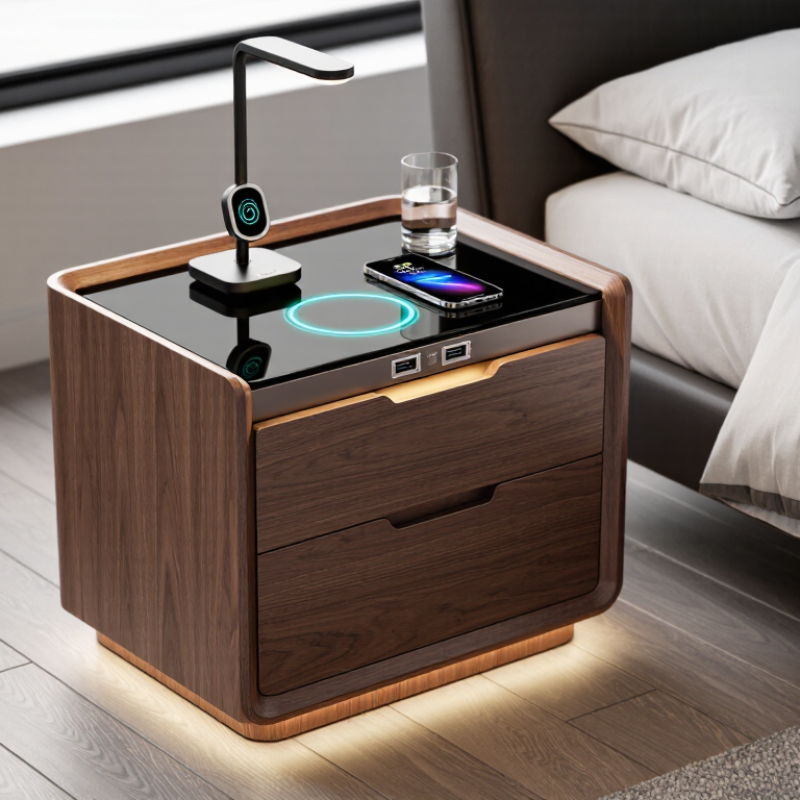
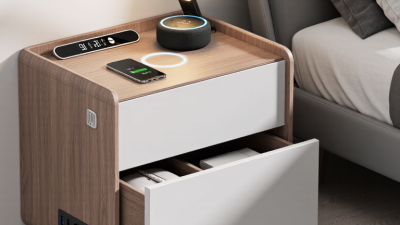
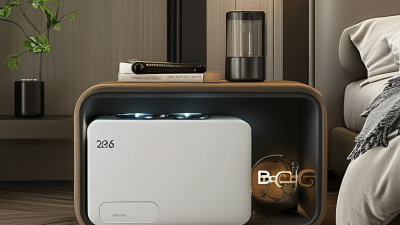
A smart nightstand combines bedside storage with built-in technology. Common features include wireless charging, USB ports, dimmable lighting, and sometimes Bluetooth speakers or app controls. The core idea is convenience: charge a phone, reach a glass of water, and switch off a soft bedside light without crossing the room. Simple, but useful.
Quality depends on more than a feature list. A stable top, smooth drawer runners, and well-managed cables matter every day. Wireless charging can be sensitive to phone position, so a clearly marked charging area helps. Look for accessible controls and lighting that dims enough for nighttime use. Electronics also need sensible heat management. More features are not always better; a speaker may add cost without improving sleep. That trade-off is worth considering.
Tips: Measure your bedside space and check the nightstand’s height against your mattress. Confirm which charging standards and devices it supports. Test the controls if possible, and inspect the cable route. Small details make a difference. Some specifications can sound impressive, yet the actual setup may feel cluttered. Be honest about what you will use.
| Evaluation Dimension | Core Feature or Specification | Practical Verification | Why It Matters |
|---|---|---|---|
| Wireless charging | An integrated charging surface using a stated wireless-charging standard and output. Qi charging products commonly specify output levels; Qi2 supports up to 15 W for compatible devices. | Check the exact supported standard and wattage, compatible-device list, coil position, and whether foreign-object detection is included. Test charging with representative devices and cases. | Clear specifications help set realistic charging expectations and reduce alignment or compatibility issues. |
| USB charging ports | USB-A and/or USB-C ports may be built into the unit. USB-C Power Delivery output varies by design and should be stated in watts. | Request port-by-port output ratings and the total available output when multiple ports are used at once. Confirm cable access and port placement. | A port count alone does not show how quickly devices can charge or whether ports share power. |
| Electrical safety and heat management | The electrical module should be designed for the intended market, with suitable insulation, protection, ventilation, and clearly rated components. | Review test reports and certifications applicable to the destination market. Ask for temperature-rise and continuous-operation test results for the assembled product. | Furniture houses electronics and charging components close to bedding and other everyday items, so safety evidence is essential. |
| Smart controls and connectivity | Optional functions can include app control, Bluetooth or Wi-Fi connectivity, touch controls, and integration with a compatible smart-home system. | Check supported platforms, setup steps, software-update policy, privacy information, and whether basic functions remain available without an internet connection. | Connectivity is an optional feature, not a universal requirement; ease of setup and ongoing support affect its usefulness. |
| Lighting and controls | Common options include dimmable bedside lighting, touch-sensitive controls, and adjustable brightness. Color temperature and dimming range should be specified when offered. | Test control responsiveness, brightness at the lowest setting, light spill, and whether settings are retained after power is interrupted. | Comfortable, predictable lighting is more useful at night than a feature list without measurable controls. |
| Furniture construction | The cabinet may use solid wood, plywood, particleboard, or other engineered panels, with finishes and hardware selected for the target price and use. | Request material and finish specifications, load limits, drawer-cycle testing, edge and surface-quality checks, and a production sample before a bulk order. | Durability depends on the complete construction and quality controls, not on appearance or material labels alone. |
| Cable management and usability | Useful designs provide an accessible charging area, orderly cable routing, and enough clearance for plugs and adapters without obstructing drawers. | Inspect the actual prototype with intended cables and adapters. Confirm that wiring is protected from drawer movement and sharp edges. | Good routing keeps the bedside area practical and helps protect cords and internal wiring. |
| Manufacturing and quality consistency | A capable manufacturer should be able to document the product configuration, inspection process, component sourcing, and change control from sample to production. | Compare a signed-off sample with production units; review inspection records, packaging tests, defect handling, and the process for approving component substitutions. | Consistency is a stronger basis for supplier selection than an unverified “best manufacturer” claim. |
There is no single universally best manufacturer for every project. The right choice depends on the required features, destination-market compliance, furniture specifications, order requirements, and verified production quality.