Leave Your Message
In 2026, the Smart Nightstand is becoming more than a small bedroom table. It can combine wireless charging, adjustable lighting, hidden storage, speakers, USB ports, and sleep-focused controls. For global buyers, choosing the right type requires more than checking its appearance.
A compact model may suit a city apartment with limited floor space. A charging-focused model can reduce cable clutter beside the bed. Some advanced designs include app control, motion sensors, temperature displays, or built-in ambient lights. These features sound impressive. However, they may increase cost, maintenance needs, and software dependence.
This guide examines the main Smart Nightstand types available for international markets. It considers practical factors, including materials, charging performance, user safety, durability, privacy, and after-sales support. Buyers should also review voltage compatibility, plug standards, wireless charging protocols, and regional certification requirements. Product claims need careful verification. A polished photo proves very little.
The best choice depends on the bedroom, user habits, and purchasing channel. A hotel buyer may value simple controls and easy cleaning. A homeowner may prefer richer connectivity and warmer wood finishes. A retailer may prioritize packaging, warranty terms, and stable supply.
Not every smart feature deserves attention. Sometimes, a reliable lamp and a strong charging pad are enough. That is worth remembering.
Our comparisons draw on product specifications, practical usage considerations, and established purchasing principles. Still, smart furniture changes quickly, and performance can vary between batches. This guide therefore encourages informed evaluation rather than automatic trust. For global buyers, the most valuable Smart Nightstand may be the one that works quietly, safely, and consistently.
2026 Top Smart Nightstand Types for Global Buyers
Smart Nightstands: Definition, Core Features, and Main Uses
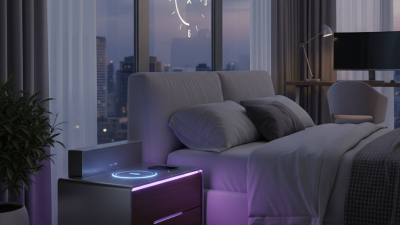
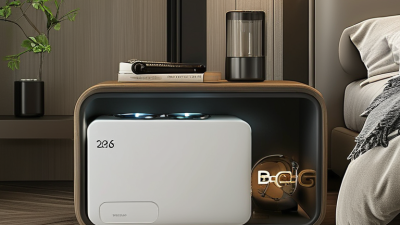
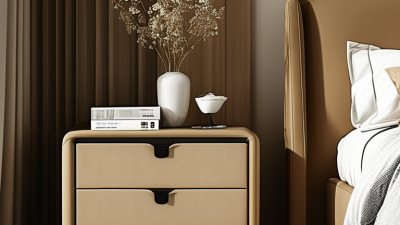
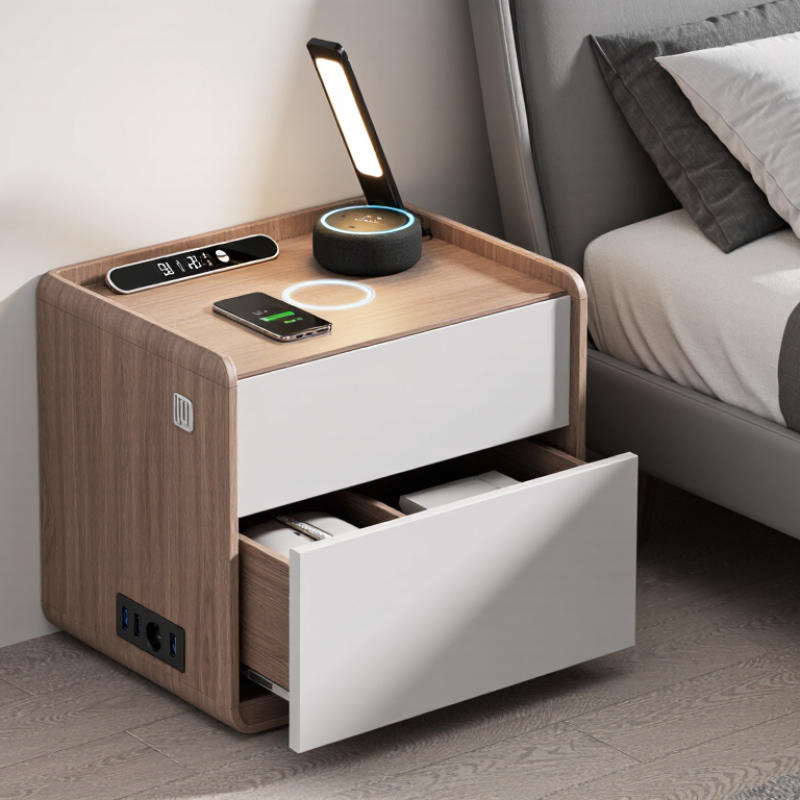
A smart nightstand is a bedside table with integrated technology for daily comfort and organization. It may include wireless charging, USB ports, lighting controls, speakers, sensors, or a small display. Unlike a traditional table, it combines storage with connected functions. The best designs keep controls simple and reachable from bed.
Core features should match real bedside habits. A stable charging surface can support a phone, watch, or wireless earbuds. Adjustable lighting helps users read without creating harsh glare. Motion sensors may activate a soft night light when someone rises. Some models also offer drawers, cable management, temperature tracking, or app-based scheduling. Safety matters too. Buyers should check electrical certifications, heat control, privacy settings, and local plug compatibility.
Smart nightstands serve homes, hotels, apartments, and assisted-living spaces. In a small bedroom, built-in charging reduces cable clutter. In hospitality settings, clear controls can improve guest convenience. For older users, gentle lighting and reachable storage may reduce nighttime movement. However, added functions can increase cost, maintenance, and repair difficulty. More technology is not always better. A reliable product should still work when the network fails. That point is sometimes overlooked. Global buyers should compare materials, warranty support, language options, and replacement-part availability before ordering.
| Smart Nightstand Type | Definition | Typical Size and Structure | Core Features | Connectivity and Power | Main Uses | Best-Suited Buyers | Key Buying Considerations |
|---|---|---|---|---|---|---|---|
| Charging Station Nightstand | A bedside table designed around integrated charging and cable-management functions for personal electronics. | Approx. 40–55 cm wide, 35–45 cm deep, and 45–65 cm high; usually includes one drawer or an open shelf. | Wireless charging surface USB-C ports AC outlets Cable storage | Commonly supports 5–20 W wireless charging, USB-C Power Delivery up to approximately 65 W, and local mains-voltage compatibility. | Charging smartphones, watches, earbuds, tablets, reading lights, and other bedside devices while reducing visible cables. | Hotels, apartments, students, business travelers, and households with several personal devices. | Check charging standards, electrical certification, plug type, heat management, and whether outlets are suitable for the destination market. |
| Ambient Lighting Nightstand | A smart bedside table with integrated lighting intended to provide adjustable illumination without requiring a separate lamp. | Approx. 40–60 cm wide with a built-in light panel, illuminated shelf, or rear light strip. | Dimmable light Warm-to-cool white control Timer Touch or app control | Usually uses low-voltage LED lighting and may connect through Bluetooth, Wi-Fi, or a local touch interface. | Reading, nighttime navigation, relaxation, wake-up routines, and decorative bedroom lighting. | Residential users, hospitality projects, senior living spaces, and buyers seeking a low-clutter bedroom setup. | Review brightness range, color temperature range, night-mode operation, replacement options, and light-source safety. |
| Sleep-Assist Nightstand | A bedside table that combines furniture storage with functions designed to support bedtime and wake-up routines. | Approx. 45–60 cm wide; commonly provides a drawer, soft-touch controls, and a dedicated device area. | Sunrise alarm Sleep sounds Routine scheduling Display dimming | May use Bluetooth or Wi-Fi for scheduling and audio control; normally operates from mains power with battery backup for clock memory. | Alarm scheduling, relaxation audio, gradual wake-up lighting, bedtime reminders, and consistent sleep routines. | Home users, shift workers, families, and wellness-focused accommodation providers. | Check whether functions work without an internet connection, how alarms behave during power loss, and whether audio settings can be disabled. |
| Health and Environment Monitoring Nightstand | A bedside unit that incorporates sensors for monitoring selected bedroom conditions and personal routine indicators. | Approx. 40–55 cm wide; may include a sensor module positioned above or beside the storage compartment. | Temperature sensing Humidity sensing Air-quality indication Routine tracking | Usually connects through Wi-Fi or Bluetooth; sensor accuracy depends on placement, calibration, airflow, and room conditions. | Checking bedroom comfort, identifying ventilation needs, supporting environmental routines, and viewing basic personal trends. | Wellness-oriented households, smart-home users, care facilities, and property managers. | Confirm which measurements are actually provided, data-storage practices, calibration requirements, and whether the product makes medical claims. |
| Climate-Control Nightstand | A bedside table that integrates or controls small comfort devices such as fans, air-quality accessories, or localized heating equipment. | Approx. 45–65 cm wide; requires ventilation space and safe clearance around electrical or air-moving components. | Device control Temperature routines Airflow settings Safety shut-off | May provide mains outlets, USB charging, Bluetooth, Wi-Fi, or infrared control depending on the connected equipment. | Bedside comfort adjustment, localized airflow, scheduled operation, and centralized control of compatible bedroom accessories. | Hot-climate households, serviced apartments, hotels, and users who prefer automated comfort settings. | Check ventilation, noise level, power consumption, child safety, condensation protection, and local electrical requirements. |
| Voice-Controlled Smart Nightstand | A bedside table or bedside hub that allows compatible functions to be operated through voice commands or a connected smart-home system. | Approx. 40–60 cm wide; may include speakers, microphones, controls, and concealed electronics. | Voice commands Lighting control Alarm control Smart-home integration | Typically requires Wi-Fi for cloud features; Bluetooth may support local audio or accessory connections. | Hands-free control of lights, alarms, music, timers, reminders, and selected connected bedroom devices. | Connected-home users, accessibility-focused buyers, hotels, and users who prefer hands-free operation. | Assess microphone privacy controls, supported languages, offline behavior, software support, and regional service availability. |
| Security and Access Nightstand | A bedside cabinet that adds controlled storage or monitoring features for valuables, medication, documents, or personal devices. | Approx. 45–60 cm wide; generally includes a lockable drawer or compartment with reinforced internal space. | Electronic lock Access alerts Concealed storage Emergency override | May use keypad, fingerprint, NFC, Bluetooth, or a mechanical backup; battery backup is important for electronic locks. | Protecting valuables, medicines, passports, electronics, and sensitive documents in bedrooms or guest rooms. | Hotels, shared homes, rental properties, care environments, and security-conscious consumers. | Verify lock reliability, emergency access, privacy of biometric data, fire resistance claims, and battery replacement procedures. |
| Modular Smart Bedside Hub | A configurable nightstand built from interchangeable modules so buyers can select storage, charging, lighting, or control functions. | Approx. 40–70 cm wide; modular dimensions vary according to drawers, shelves, panels, and accessory attachments. | Replaceable modules Expandable storage Integrated charging Upgradeable controls | May combine USB-C, wireless charging, low-voltage lighting, Bluetooth, Wi-Fi, or interchangeable power modules. | Adapting to changing device needs, furnishing different room layouts, and combining several bedside functions in one unit. | Interior designers, property developers, families, hospitality buyers, and long-term furniture purchasers. | Check module compatibility, replacement availability, structural stability, repairability, and the total cost of future expansion. |
| Accessible Smart Nightstand | A bedside table designed to make storage, lighting, charging, and controls easier to reach and operate for users with mobility or sensory needs. | Approx. 45–65 cm wide; may include reachable controls, rounded edges, open shelving, and adjustable height options. | Large controls Reachable storage High-contrast indicators Hands-free options | Can use touch, remote, voice, or physical controls; charging and lighting should remain usable from the bed. | Supporting independent access to personal items, communication devices, lighting, alarms, and emergency contact tools. | Older adults, users with disabilities, rehabilitation facilities, and accessible accommodation projects. | Evaluate reach range, control force, visibility, stability, rounded construction, cleaning requirements, and compatibility with care routines. |