How to Choose the Best Floating Nightstand?
Choosing the best Floating Nightstand starts with more than attractive photographs. It requires careful attention to wall strength, bedside reach, storage needs, and daily habits. A compact bedroom may benefit from a slim shelf, while a larger room can support drawers, charging space, and stronger visual balance. Interior designer Emily Henderson describes a useful principle: “Every item beside the bed should earn its place.” That idea fits a Floating Nightstand perfectly. It should hold your phone, reading glasses, lamp, and perhaps one small book without becoming cluttered.
This guide will examine materials, mounting systems, dimensions, finishes, cable management, and cleaning needs. Solid wood feels warm and dependable. Metal can look lighter and more modern. Engineered panels may cost less, but their load capacity deserves closer attention. A nightstand that appears secure may still fail when mounted into weak drywall. That detail is easy to miss.
Measure twice.
Your mattress height matters too. The top surface should sit close to mattress level, allowing comfortable access without stretching. Consider door swings, baseboards, outlets, and wall studs before buying. I have learned that many attractive designs lose practicality after installation. A hidden cable opening may also be too narrow for a bulky charger. No checklist is flawless, but honest planning reduces disappointment. The following sections will help you compare Floating Nightstand options with greater confidence, safety, and long-term value.
What Is a Floating Nightstand and How Does It Work?
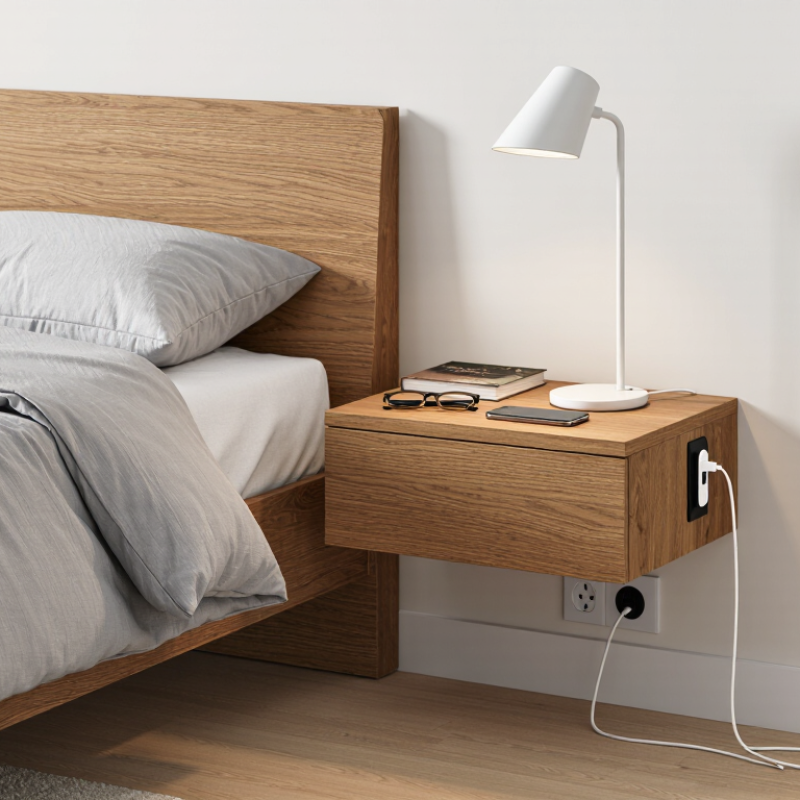
A floating nightstand is a bedside table fixed directly to the wall. It has no visible legs, so the floor remains open beneath it. A hidden bracket, mounting rail, or French cleat carries the load. That empty space matters. It makes cleaning easier and can make a small bedroom feel less crowded.
The nightstand works by transferring weight into wall studs or solid masonry. Drywall alone may not support books, lamps, and personal items safely. Use fasteners rated for your wall type, and follow the hardware instructions carefully. Measure the height beside your mattress, keeping the tabletop easy to reach without stretching. A compact drawer can hold glasses, while a rear cable opening keeps charging wires from falling behind the bed.
Choose a model with a stated weight capacity and enough depth for your lamp base. Check door clearance before installation. Measure twice. Do not guess. A level surface is useful, but it is not the only concern. Poorly tightened screws can create wobbling, wall damage, or unwanted noise. One practical lesson is that a nightstand may look secure while its bracket is only partly attached to a stud. Inspect every fixing point, test the unit gently, and add weight gradually. Even a well-designed floating nightstand needs thoughtful installation.
Which Materials and Designs Suit Your Bedroom Best?
A floating nightstand should match your bedroom’s materials, habits, and available wall space. Solid wood brings warmth, visible grain, and strong daily performance. However, it can feel visually heavy in a small room. Quality plywood offers stability with less weight. Veneered panels create a refined appearance, but damaged edges may reveal the core.
Metal suits modern bedrooms and supports heavier objects when properly anchored. It can also feel cold beside pale bedding. Moisture-resistant finishes matter near humid rooms or frequently opened windows. Check the surface for peeling, sharp corners, and uneven joints before choosing. These small details often predict long-term durability.
The design should hold your essentials without becoming a storage box. A drawer can hide chargers, while an open shelf keeps books within reach. Leave enough clearance for your knees and bedding. Cable openings are useful, but oversized holes collect dust. For safety, select wall hardware that matches your wall type and the expected load. I once chose a beautiful narrow shelf that barely held a lamp and phone. It looked balanced, but daily use felt inconvenient. That mistake changed my preference: measure the lamp, book, and charging cable together before buying. A soft-close drawer, rounded edge, and stable mounting system may matter more than a fashionable finish.
How to Choose the Best Floating Nightstand?
Material weight is an important factor when selecting a wall-mounted nightstand. A lighter panel places less load on the wall anchors, while solid wood offers a more natural appearance and stronger visual character.
How to read the chart: The values show the approximate mass of a 600 × 250 × 18 mm panel. Actual weight varies with moisture content, construction, and finish.
- Pine: The lightest option, suitable for minimalist designs and lighter-duty storage.
- Birch plywood: A balanced choice with good dimensional stability and a clean layered edge.
- Oak: Heavier and visually substantial, best for robust designs when the wall structure and anchors can support the load.
- MDF: Smooth and easy to paint, but its higher density and sensitivity to moisture make sealed edges important.
For bedrooms with limited wall strength, choose a compact design with concealed brackets and a lightweight material. For a warmer, more traditional look, solid wood works well; for modern painted interiors, sealed MDF or plywood provides a cleaner finish.
What Installation Methods and Safety Features Should You Consider?
How to Choose the Best Floating Nightstand?
Installation method should match your wall, load, and daily habits. A stud-mounted cleat usually offers stronger support than ordinary hollow-wall anchors. For masonry, use compatible masonry anchors and drill to the manufacturer’s stated depth. Never guess the wall structure. During installation work, I check for pipes, cables, and uneven surfaces before drilling. A small spirit level also prevents cups from sliding toward the edge.
Safety deserves equal attention. The U.S. Consumer Product Safety Commission’s 2023 furniture tip-over report estimated an annual average of about 22,000 emergency-department injuries from furniture tip-overs during 2018–2020. A floating nightstand is smaller, but loose hardware can still cause falling objects or wall damage. Choose rounded corners, a front retaining lip, and load-rated hardware. Check whether the stated capacity includes the drawer, books, and charging devices. It often does not. That detail is easy to miss.
Tips: Locate at least one stud whenever possible. Tighten screws gradually, not aggressively. Test the nightstand with light pressure before adding weight. Keep chargers away from sharp bends and damaged cables. Leave clearance around outlets and heating equipment. Recheck the fasteners after several weeks. Walls can settle, and my first installation was not perfectly level. A second inspection is worthwhile. Reference: U.S. Consumer Product Safety Commission, Furniture Tip-Over Injury and Fatality Reports, 2023.
How to Match a Floating Nightstand to Your Budget and Needs?
Choosing the best floating nightstand starts with an honest budget and a clear bedtime routine. A compact shelf may cost less, but it must still hold your lamp, phone, and water glass. Measure the wall space beside your bed before shopping. Leave at least a few inches around the mattress and door swing. Small rooms reward shallow designs.
Your wall type affects the real installation cost. Drywall may need anchors, while masonry usually requires different hardware and careful drilling. Check the nightstand’s stated weight limit, not just its appearance. Add the weight of books, chargers, and a ceramic mug. I once chose a stylish shelf with weak support, and it began tilting within weeks. That mistake taught me to inspect brackets before admiring finishes.
Match features to habits, not trends. A drawer protects glasses and medication from dust, but it often raises the price. An open shelf costs less and keeps essentials visible. Cable openings can prevent a charger from hanging across the floor. Measure your charging cable first; some openings are surprisingly narrow. If you rent, a lightweight unit with removable mounting hardware may reduce wall damage, though it may support less weight. Solid wood can feel durable, but engineered panels may fit a tighter budget. Compare edge quality, hardware strength, and assembly instructions. A cheaper choice is not automatically practical. Sometimes paying slightly more prevents replacement costs, but that depends on daily use.